
When Hackers Turn Up the Heat:
What the Selver Freezer Attack Means for Food Safety and Cybersecurity
A freezer set to +50°C
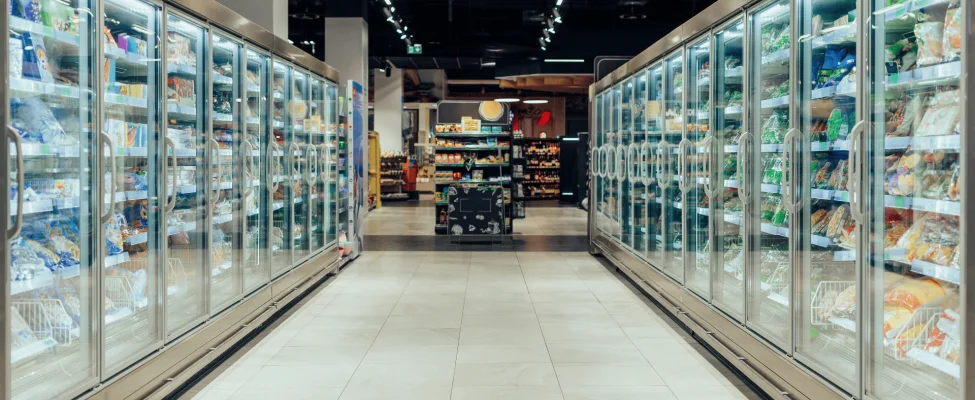
On the morning of 2 November 2026, attackers broke into the computer controlling refrigeration at a Selver supermarket in Estonia and set a freezer to 50 degrees above zero. The store was lucky: its refrigeration partner spotted the attack and responded within about ten minutes, so the freezers warmed by only two to three degrees and no food was lost (ERR News).
Others were not so lucky. On the same day, stores in Sweden, Belgium and Luxembourg reported similar incidents, and Swedish ICA stores had to throw away spoiled goods. About three weeks earlier, hundreds of food stores in France were hit by attackers who triggered defrost cycles. According to the refrigeration supplier quoted by ERR, the attackers went after older, unpatched controllers, in this case an older type of Danfoss system.
Talk to us before the next attack tests your cold chain. Contact BM Certification to discuss a NIS2 assessment or your food safety certification.
At BM Certification we audit food businesses against food safety schemes and assess organisations against cybersecurity requirements. This incident sits exactly where those two worlds meet.
Cyber risk is now a food safety hazard
Cold chain temperature is one of the most basic food safety controls. In most HACCP plans it is a critical control point or an operational prerequisite programme, monitored and recorded regularly. Until recently, the threats to it were physical: a broken compressor, a power cut, a door left open.
The Selver case shows a new kind of hazard. When refrigeration controllers are connected to a network, a remote attacker can change a setpoint as easily as a technician can. The result is the same as an equipment failure, but it can hit many stores at once, at night, with no visible sign until products thaw.
This also matters beyond retail. Food manufacturers, cold stores and logistics companies rely on the same kind of connected building management and refrigeration systems. If the controller is old, reachable from outside and never patched, it is a target.
What the standards already expect?
None of this requires a brand-new framework. The requirements are already there; the question is whether companies apply them to their digital systems.
- ISO 22000 and FSSC 22000. Hazard analysis, monitoring of control measures and emergency preparedness should cover the failure of temperature control, whatever the cause. FSSC 22000 also requires a food defence threat assessment. A remote attack on refrigeration controllers is a credible threat that belongs in it.
- NIS2. The EU NIS2 Directive covers food businesses engaged in industrial production, processing and wholesale distribution. In-scope companies must manage cybersecurity risks, including supply chain and supplier risks, handle incidents and report significant ones. A refrigeration contractor with remote access to your controllers is exactly such a supplier.
- ISO/IEC 27001. An information security management system gives the structure to inventory connected assets, control remote access, manage vulnerabilities and test incident response. Operational technology such as refrigeration and building controls should be inside its scope, not forgotten outside it.
The Selver story also shows what good looks like. The chain had followed similar attacks abroad, replaced controllers store by store and had a partner monitoring the systems. Fast detection and a ten-minute response turned a potential loss into a non-event.
Six questions to ask this week
If you run a food store, factory, cold store or warehouse, start with these:
- Do we know every connected controller? List refrigeration, HVAC and building management devices, their age, firmware version and who maintains them.
- Who can reach them from outside? Check remote access paths used by contractors and suppliers. Remove direct internet exposure and require secure, logged access.
- Are old controllers still running? The attacks targeted outdated, unpatched systems. Plan replacement or isolation for anything the vendor no longer supports.
- Would we notice within minutes? Make sure temperature alarms reach a person 24/7, including setpoint changes, not only temperature drift.
- Is it in our food safety plan? Add cyber attack on temperature control to the hazard analysis, food defence assessment and emergency procedures, including what to do with affected product.
- Have we rehearsed it? Run a short exercise with your refrigeration partner: alarm, response, product hold, decision and reporting.
How BM Certification can help?
Food safety and cybersecurity are usually handled by different teams and audited separately. Attacks like this one show they need to be looked at together.
BM Certification works with food businesses across the Europe. We can help you:
- Understand your NIS2 gap. Find out whether NIS2 applies to you and where your current measures fall short.
- Verify what you have built. Get an independent assessment of the cybersecurity measures you have already put in place.
- Show it to partners. Demonstrate compliance to retailers, customers and supply chain partners who increasingly ask for proof.
- Keep food safety certification robust. Through FSSC 22000 and ISO 22000 audits we look at whether hazard analysis and food defence cover today’s threats, including digital ones.
Talk to us before the next attack tests your cold chain. Contact BM Certification to discuss a NIS2 assessment or your food safety certification.
—
Sources
- Hackers raised freezer temperature at Selver supermarket to +50°C, ERR News, 2 November 2026
Do you want to close the form?
Data will not be saved or sent.
Send us a message
Thank you, your message has been received!